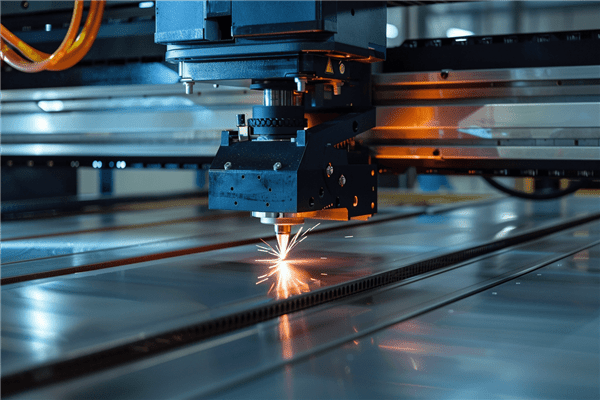
A coil processing line is a sequence of engineered, mechanically and electronically synchronized stations that transform a metal coil into a finished blank, sheet, or component without a single manual handoff between stages, unlike a stand-alone press or shear that works on material prepared elsewhere.
That distinction matters: in sheet-fed production, every changeover risks a defect or delay. A coil line removes that risk by design, moving material from entry to finished part with tension, speed, and positioning managed automatically throughout.
What distinguishes a truly integrated line from simply joined machines is the function of each block, why it exists, and how it moves to the next.
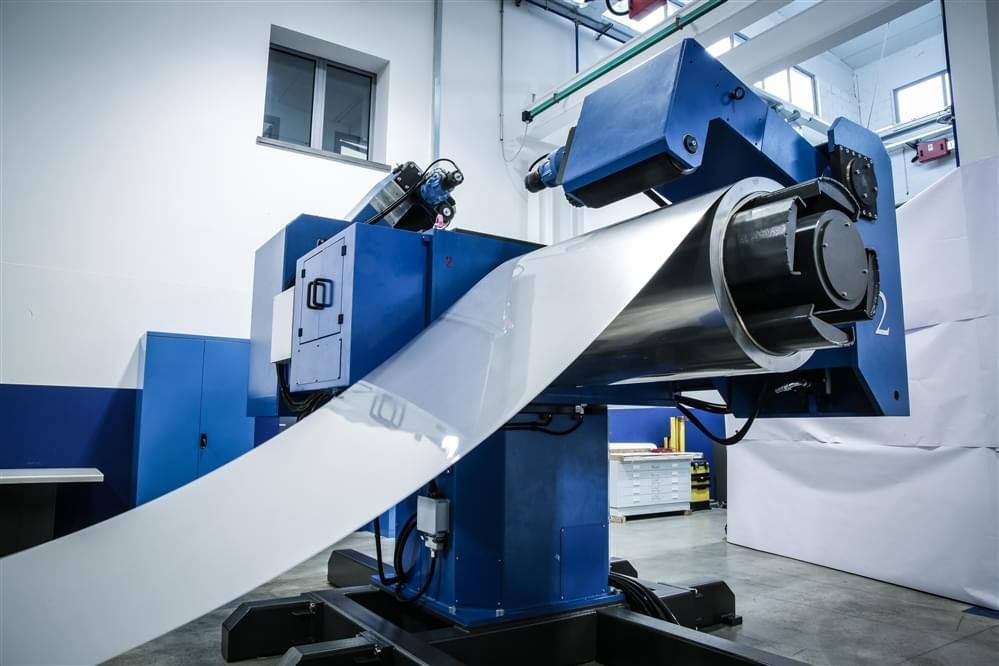
Every line starts with the coil itself, often several tons of tightly wound metal strip under considerable internal tension. The coil management stage is responsible for mounting that coil securely, controlling its unwind, and feeding material downstream at a constant, regulated tension.
Get this wrong and nothing downstream works reliably: uneven tension produces wandering strip, telescoping, or surface marking before the material has even reached the first working station. Get it right, and the rest of the line can run at full speed without operator intervention, because the coil pays off exactly as fast, and exactly as flat, as the next station needs it to.
Coiled metal remembers being coiled. Even after it unwinds, the strip retains curvature (coil set), along with wave, buckle, or crossbow depending on how it was rolled and stored. Left uncorrected before a cutting or forming station, the result is dimensional drift: parts that are technically cut to spec but physically out of flat.
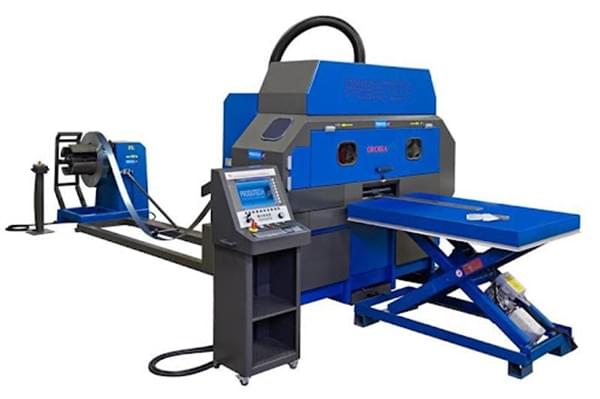
The straightening stage eliminates that memory mechanically, running the strip through offset rollers that reverse-bend it until it lies flat. In many integrated systems, this isn't a separate machine bolted onto the line: iit's built into the working unit's entry section, which is how Produtech's OROBIA punching systems are configured, with straightening incorporated directly into the machine frame rather than supplied as an additional station to install, align, and maintain separately.
None of the blocks above function in isolation. What makes a coil processing line a system, rather than a sequence of stations, is the control logic that coordinates them:
Produtech's punching linesrely on linear and torque motors precisely for this reason: they allow the mechatronic system to hold tight parameters across a full production run with minimal drift, and with maintenance requirements considerably lower than lines built around traditional mechanical drivetrains.