Laser punch combination machine or separate systems? A practical comparison

Every fabricator processing coil-fed sheet metal eventually faces the same decision: invest in one machine that punches and laser-cuts, or keep punching and laser cutting on two dedicated lines. Both are valid, and the right answer depends on what you actually produce.

This page provides an overview of: 

What is a laser punch combination machine?

A laser punch combination machine is a single coil-fed system that punches and laser-cuts sheet metal in one continuous line, rather than as two separate operations.

Produtech's EffiCOIL is built this way: an electric punching unit and a fiber laser cutting unit share the same working area, synchronized so that a part can move from punching straight into laser cutting without stopping or repositioning. This setup is also called a punch laser combination machine, or simply a laser punch combo, depending on which term you're used to. 
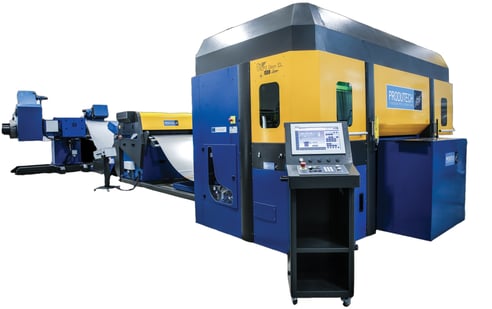
efficoil-105-3


The alternative is a standalone punching line paired with a separate fiber laser system, such as Produtech's ISEO,  which keeps the two processes independent, linked only by however the material moves between them.

The real cost comparison: laser punch combo vs. separate machines

A combination machine concentrates capital into a single, more complex asset. Two separate machines split that investment but add the cost of connecting them: conveyors, buffer storage, or manual transfer, plus the labor time spent moving parts between stations.

What matters more than the upfront price is where the ongoing cost lands. A combo machine reduces the labor and handling cost per part, since punching and laser cutting happen in one pass without repositioning.
Two separate machines make more sense when volumes are high enough on each process independently to keep both lines running continuously, without one waiting on the other. That's the one scenario, across the whole comparison, where splitting into two dedicated machines pays off.


cta

Not sure which setup fits your production mix?

A quick technical conversation can match your part volumes and batch sizes to the right configuration, whether that's a combination machine or two dedicated lines.
 

Floor space: all the differences

Coil-fed combination machines are designed to run a strip of material through both processing heads in sequence, inside one working envelope. Two separate machines each need their own footprint, plus the space for staging material between them, whether that's a conveyor, a cart path, or simply floor area for work-in-progress.

Shops with limited space benefit most from consolidating into one line; shops with room to spare, and volumes that justify running two lines in parallel, can keep that flexibility.


Handling and setup: where the time actually goes

On a combination machine like EffiCOIL, the punching and laser heads are synchronized and operate within the same working area: the sheet metal strip moves through punching, forming, and laser cutting in a single continuous pass, with one setup and one program.

With separate machines, each part typically requires:

  • A first pass through the punching machine
  • Transfer (manual or automated) to the laser cutting system
  • A second setup and positioning step before laser cutting begins

That transfer step is where most of the added time, and most of the risk of positioning error, comes from. It's also the step a combination machine removes entirely, except in the high-volume, single-process scenario already covered above.

Sectors that benefit from a laser punch combination machine

The cost, footprint, and workflow trade-offs above play out differently depending on what's being produced. A few sectors where Produtech's EffiCOIL, a punch laser combination machine, is used show why:

  • Automotive: parts like brackets, reinforcements, and small structural components are typically produced in high, steady volumes with tight tolerances. Here the workflow advantage compounds: every part that skips a handoff between machines is one less chance for something to shift out of tolerance across a long production run.
  • Construction and architecture: façade panels, structural profiles, and cladding elements need precise, repeatable geometries but often in more varied batch sizes than automotive. The single-setup advantage of a combination machine matters more here than raw throughput, since batches change more often.
  • Logistics, storage, and metal container manufacturing: these applications tend to combine punched features (holes, louvers, mounting points) with cut contours on the same part, which is exactly where eliminating the transfer step has the most direct effect on cycle time.
  • Aerospace and electronics: precision and traceability matter as much as speed, which makes eliminating setup steps between processes especially valuable.
cta

See EffiCOIL in action

Explore the punch laser combination machine built for high-mix, high-precision sheet metal production, straight from the coil.


FAQ

  1. Can a laser punch combination machine fully replace two separate machines?
    For parts that need both punching and laser cutting, yes. Dedicated single-process machines still make more sense for production that's entirely punching-only or laser-only at high volume.
  2. Does a combination machine slow down when only one process is needed?
    No. On machines like EffiCOIL, the punching and laser heads operate independently even though they're synchronized, so a part that only needs punching, or only laser cutting, doesn't have to pass through the other head.
  3. Is switching between punching and laser cutting slower on a combined machine than on two dedicated ones?
    Within a single part program, no. The two heads work in the same cycle without a separate changeover.


Find the best solution for you

Contact us for more info